TOP Contributors

  1. MIKROE (2784 codes)
  2. Alcides Ramos (405 codes)
  3. Shawon Shahryiar (307 codes)
  4. jm_palomino (133 codes)
  5. Bugz Bensce (97 codes)
  6. S P (73 codes)
  7. dany (71 codes)
  8. MikroBUS.NET Team (35 codes)
  9. NART SCHINACKOW (34 codes)
  10. Armstrong Subero (27 codes)

Most Downloaded

  1. Timer Calculator (142047 times)
  2. FAT32 Library (75269 times)
  3. Network Ethernet Library (59483 times)
  4. USB Device Library (49502 times)
  5. Network WiFi Library (45278 times)
  6. FT800 Library (44900 times)
  7. GSM click (31422 times)
  8. mikroSDK (30425 times)
  9. microSD click (27783 times)
  10. PID Library (27619 times)
Libstock prefers package manager

Package Manager

We strongly encourage users to use Package manager for sharing their code on Libstock website, because it boosts your efficiency and leaves the end user with no room for error. [more info]

< Back
mikroSDK Library

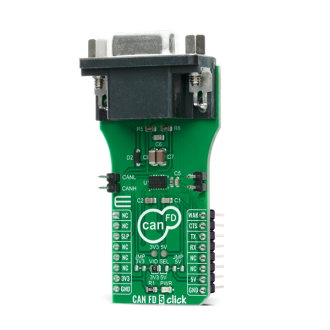
CAN FD 5 click

Rating:

5

Author: MIKROE

Last Updated: 2020-09-23

Package Version: 1.0.0.0

mikroSDK Library: 1.0.0.0

Category: CAN

Downloaded: 3799 times

Not followed.

License: MIT license  

CAN FD 5 Click is a compact add-on board that contains a high-speed CAN transceiver that supports both CAN and CAN FD protocol types.

No Abuse Reported

Do you want to subscribe in order to receive notifications regarding "CAN FD 5 click" changes.

Do you want to unsubscribe in order to stop receiving notifications regarding "CAN FD 5 click" changes.

Do you want to report abuse regarding "CAN FD 5 click".
  • mikroSDK Library 2.0.0.0
  • Comments (0)
DOWNLOAD LINK RELATED COMPILER CONTAINS
mikroBasic PRO for ARM
  • lib
  • src
  • exa
  • hlp
  • hex
  • sch
  • pcb
  • doc
mikroBasic PRO for AVR
  • lib
  • src
  • exa
  • hlp
  • hex
  • sch
  • pcb
  • doc
mikroBasic PRO for dsPIC30/33 & PIC24
  • lib
  • src
  • exa
  • hlp
  • hex
  • sch
  • pcb
  • doc
mikroBasic PRO for FT90x
  • lib
  • src
  • exa
  • hlp
  • hex
  • sch
  • pcb
  • doc
mikroBasic PRO for PIC
  • lib
  • src
  • exa
  • hlp
  • hex
  • sch
  • pcb
  • doc
mikroBasic PRO for PIC32
  • lib
  • src
  • exa
  • hlp
  • hex
  • sch
  • pcb
  • doc
mikroC PRO for ARM
  • lib
  • src
  • exa
  • hlp
  • hex
  • sch
  • pcb
  • doc
mikroC PRO for AVR
  • lib
  • src
  • exa
  • hlp
  • hex
  • sch
  • pcb
  • doc
mikroC PRO for dsPIC30/33 & PIC24
  • lib
  • src
  • exa
  • hlp
  • hex
  • sch
  • pcb
  • doc
mikroC PRO for FT90x
  • lib
  • src
  • exa
  • hlp
  • hex
  • sch
  • pcb
  • doc
mikroC PRO for PIC
  • lib
  • src
  • exa
  • hlp
  • hex
  • sch
  • pcb
  • doc
mikroC PRO for PIC32
  • lib
  • src
  • exa
  • hlp
  • hex
  • sch
  • pcb
  • doc
mikroPascal PRO for ARM
  • lib
  • src
  • exa
  • hlp
  • hex
  • sch
  • pcb
  • doc
mikroPascal PRO for AVR
  • lib
  • src
  • exa
  • hlp
  • hex
  • sch
  • pcb
  • doc
mikroPascal PRO for dsPIC30/33 & PIC24
  • lib
  • src
  • exa
  • hlp
  • hex
  • sch
  • pcb
  • doc
mikroPascal PRO for FT90x
  • lib
  • src
  • exa
  • hlp
  • hex
  • sch
  • pcb
  • doc
mikroPascal PRO for PIC
  • lib
  • src
  • exa
  • hlp
  • hex
  • sch
  • pcb
  • doc
mikroPascal PRO for PIC32
  • lib
  • src
  • exa
  • hlp
  • hex
  • sch
  • pcb
  • doc

mikroSDK Library Blog

CAN FD 5 Click

CAN FD 5 Click

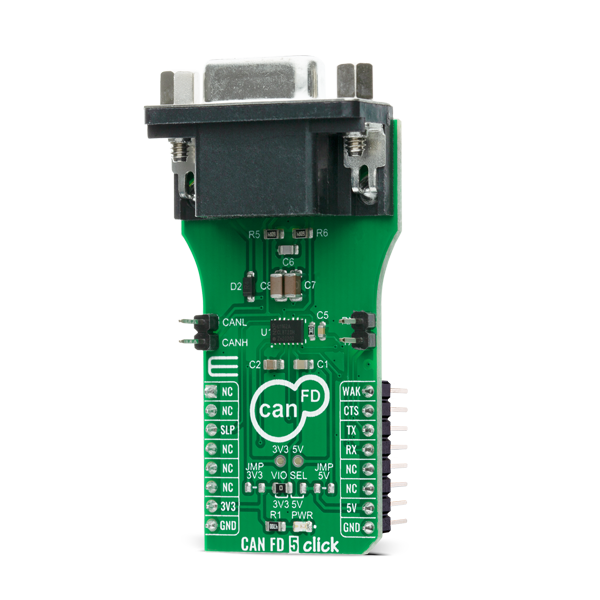
Native view of the CAN FD 5 Click board.

View full image
CAN FD 5 Click

CAN FD 5 Click

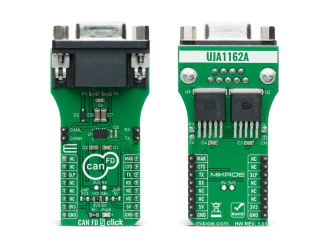
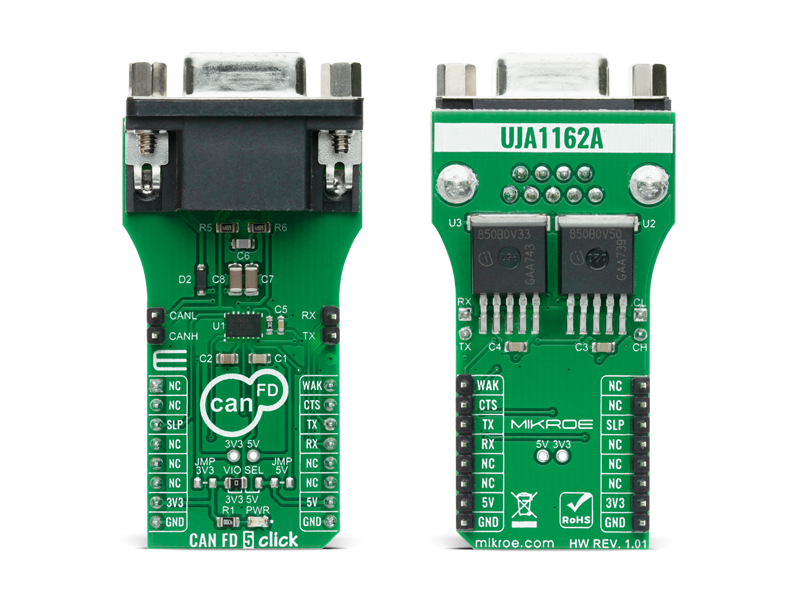
Front and back view of the CAN FD 5 Click board.

View full image

Library Description

The library covers all the necessary functions to control CAN FD 5 click board. Library performs a standard UART communication.

Key functions:

  • void canfd5_write_byte ( uint8_t input ) - Write Single Byte.
  • void canfd5_set_normal_operating_mode ( void ) - Set normal operating mode function.
  • void canfd5_set_operating_mode ( uint8_t op_mode ) - Set operating mode function.

Examples description

The application is composed of three sections :

  • System Initialization - Initializes UART, sets CS and PWM pins as output and INT pin as input.
  • Application Initialization - Initialization driver enables - UART, performs an normal operating mode, also write log.
  • Application Task - (code snippet) This is an example that demonstrates the use of the CAN FD 5 click board. This application task writes message data via UART every 3 seconds. Results are being sent to the Usart Terminal where you can track their changes.
void application_task ( )
{
    mikrobus_logWrite( "----------------------", _LOG_LINE );
    mikrobus_logWrite( "", _LOG_LINE );
    
    canfd5_write_data( &demo_message_data[ 0 ] );
    
    mikrobus_logWrite( "  TX Data:  ", _LOG_TEXT );
    mikrobus_logWrite( demo_message_data, _LOG_LINE );
    Delay_ms( 3000 );
}

Other mikroE Libraries used in the example:

  • UART

Additional notes and informations

Depending on the development board you are using, you may need USB UART clickUSB UART 2 click or RS232 click to connect to your PC, for development systems with no UART to USB interface available on the board. The terminal available in all MikroElektronika compilers, or any other terminal application of your choice, can be used to read the message.

ALSO FROM THIS AUTHOR

4DotMatrix click

6

4Dot-Matrix R click allows you to display 4 characters of 5x7 dot size. The click is designed to run on either 3.3V or 5V power supply. It communicates with the target microcontroller over I2C interface.

[Learn More]

Peltier Click

5

The Peltier Click is a Click board which utilizes the SPV1050, an ultralow power energy harvester and battery charger from STMicroelectronics.

[Learn More]

CO2 3 Click

0

CO2 3 Click is a compact add-on board that allows for precise and reliable indoor air quality measurements. This board features XENSIV™ PASCO2V01BUMA1, a highly accurate CO2 sensor module from Infineon Technologies that uses photoacoustic spectroscopy technology to measure indoor air quality. The module comprises a gas measuring cell, an IR emitter, a microphone, and a microcontroller for data processing. Its key components are developed in-house, ensuring the highest quality and performance. Other major characteristics include high accuracy, low power consumption, and versatile configuration options.

[Learn More]